


When the Court of Arbitration for Sport (CAS) suspended the Chess Federation of Russia (CFR) from FIDE, it drew a clear legal line. FIDE’s leadership has now chosen to cross it.
The inclusion of an official Russian team at the inaugural FIDE World University Team Chess Championship in Almaty is not an innocent oversight. It is a deliberate breach of a binding ruling issued by the highest judicial authority in international sport.
This is no longer about a university tournament.
It is about whether FIDE still considers international law binding, or merely inconvenient when political interests are at stake.
The Russian Playbook Never Changed
The tournament perfectly illustrates how today’s FIDE operates.
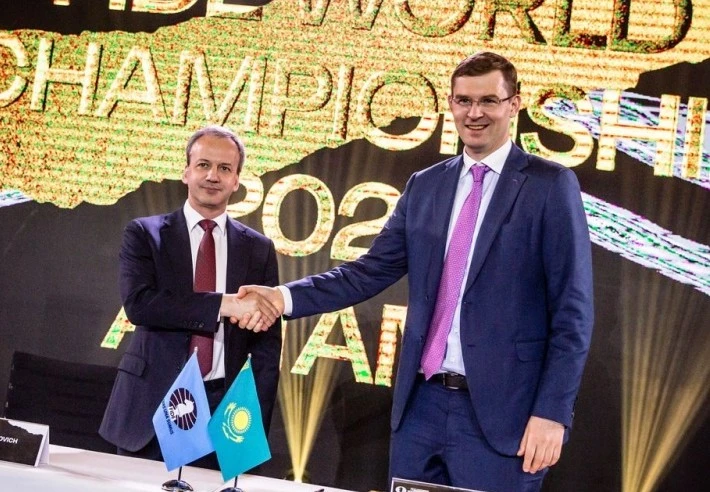
It is co-organized by FIDE and Timur Turlov, the Russian-born billionaire who became a Kazakh citizen, assumed leadership of the Kazakh Chess Federation, and is increasingly emerging as the political heir to Arkady Dvorkovich’s influence within world chess.
Shielded by Deputy President Viswanathan Anand’s unparalleled reputation, the Dvorkovich-Turlov leadership continues to consolidate its influence while portraying political continuity as institutional stability.
Whether by coincidence or by design, the result is unmistakable: the same geopolitical interests continue to shape the federation’s most sensitive decisions.
Calculated Cynicism
Grandmaster Peter Heine Nielsen and chess official George Mastrokoukos have both argued publicly that allowing an official Russian team to participate violates the CAS ruling.
If they are correct, and FIDE has yet to provide a convincing legal explanation otherwise, then what happened in Almaty was not an administrative mistake.
It was a political calculation.
The strategy rests on calculated cynicism.
For years, Kremlin-aligned sports officials have operated on a simple assumption: that the international community rarely has the time, money, or institutional stamina to pursue legal accountability to its ultimate conclusion. Delay proceedings. Exploit procedural ambiguity. Change jurisdictions. Create new structures (like International School Chess Federation (ISCF)). By the time legal institutions catch up, the political objective has already been achieved.
That strategy has worked remarkably well.
Until recently.
The Illusion of Impunity
Arkady Dvorkovich’s recent inclusion on the European Union’s sanctions list should have sent an unmistakable message. International institutions may move slowly, but they do move. Political influence can delay accountability. It cannot eliminate it indefinitely.
Yet instead of exercising greater caution, FIDE’s leadership appears to have become even more confident that the rules can be stretched without consequence.
That confidence is precisely what makes the current course so reckless.
Leaderships that begin believing they are untouchable inevitably become careless, not only in their compliance with international rules, but in their stewardship of the institutions entrusted to them. They stop calculating long-term risks because they become convinced that consequences are for others.
History repeatedly shows that this is how institutional crises begin.
They Are Gambling With FIDE
The real danger is no longer reputational.
It is institutional.
Timur Turlov is already under Ukrainian sanctions. Whether European authorities eventually reach the same conclusion remains to be seen. But scrutiny of individuals closely associated with Russian political and business networks is increasing, not decreasing.
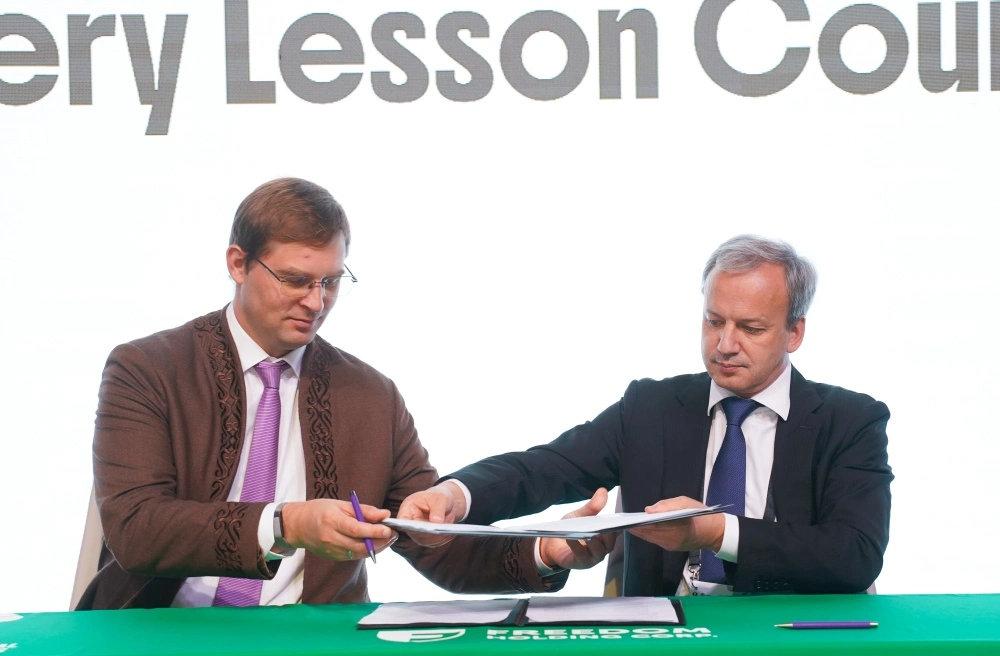
The consequences are already becoming visible. Shortly after Turlov acquired the German chess company ChessBase, its long-standing bank account was reportedly terminated by the bank. Whatever the precise reasons, the episode illustrates a broader reality: institutions connected with politically exposed individuals increasingly face commercial and financial risks that did not exist only a few years ago.
Against that backdrop, FIDE’s willingness to openly disregard a binding CAS ruling becomes more than a legal controversy.
It becomes an institutional risk.
If an international sports federation develops a reputation for facilitating the circumvention of international restrictions, the consequences rarely remain confined to headlines.
Sponsors begin asking questions.
Banks begin asking questions.
Regulators begin asking questions.
Commercial partners begin asking questions.
And once those questions begin, they rarely move in only one direction.
The possibility that FIDE itself could eventually face broader legal, financial, or regulatory consequences is no longer an implausible hypothetical. Institutions do not collapse because of one reckless decision. They collapse because leaders repeatedly convince themselves that they are too powerful, too connected, or too indispensable for the rules to apply to them.
That is the gamble FIDE’s leadership is making today.
Not with their own future.
With FIDE’s.
A Choice for Every Federation
George Mastrokoukos has argued that national federations are under no obligation to follow the current leadership into legally questionable territory.
He is right.
Every federation now faces a choice.
It can dismiss Almaty as an isolated controversy.
Or it can recognize a broader pattern.
A governing body that begins treating binding court rulings as optional does not simply weaken the rule of law.
It weakens confidence in every decision it makes.
Confidence is the one asset an international federation cannot afford to lose.
If today’s leadership is prepared to disregard a binding CAS ruling simply to demonstrate that Russia can still compete under another flag, then this is no longer a debate about tournament regulations.
It is a question of fiduciary responsibility.
Every official entrusted with governing FIDE has a duty to protect the federation’s legal standing, financial stability, and international credibility. Leaders who instead expose the organization to mounting legal, financial, and political risks in pursuit of someone else’s geopolitical agenda are not defending FIDE.
They are gambling with its survival.