

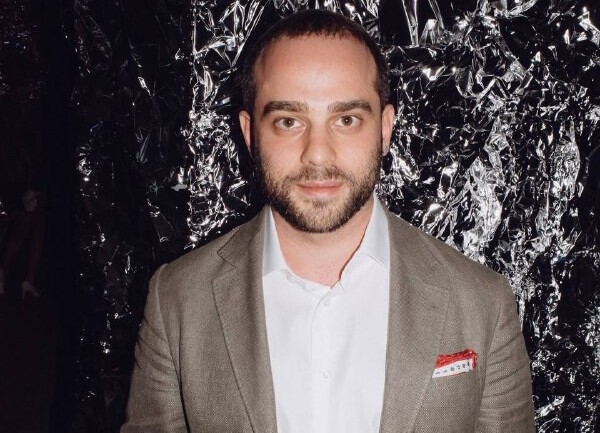
Two Continents. Two Defeats. One Difficult Road to FIDE.
Every political campaign eventually reaches a moment when perception collides with reality. For Wadim Rosenstein’s bid for the FIDE presidency, that moment may have arrived much sooner than expected.
Within the space of just a few days, two major continental elections delivered results that are difficult to ignore. In Europe, the ticket closely associated with Rosenstein secured only seven votes at the European Chess Union General Assembly in Bucharest.
In Africa, outgoing African Chess Confederation President Tshepiso Lopang, widely regarded as closely aligned with Rosenstein’s campaign, was narrowly defeated by Kenya’s Benard Wanjala in Addis Ababa, despite entering the election as the incumbent.
Neither result determines who will become the next President of FIDE.
Taken together, however, they raise an increasingly uncomfortable question: has Rosenstein mistaken financial visibility for political support?
A Campaign Built on a Short Chess History
For the past several years, Rosenstein has pursued an unconventional path into the highest levels of international chess.
Before 2022, he had virtually no visible public profile within international chess. His emergence coincided with the creation of WR Chess and his first widely noticed appearances alongside Sergey Karjakin, who at the time was serving a FIDE suspension after publicly supporting Russia’s invasion of Ukraine. Rosenstein himself has never publicly stated his position regarding the invasion, despite becoming an increasingly prominent figure in international chess over the following years.
Since then, WR Chess has invested substantial financial resources into elite tournaments and professional chess. Those investments are undeniable and have helped bring additional funding to the game.
The underlying assumption behind Rosenstein’s political rise appears straightforward: if substantial private investment could elevate elite chess, political support might naturally follow.
Bucharest suggested otherwise.
Addis Ababa reinforced the point.
Money Creates Visibility. Votes Require Trust.
The distinction matters.
Elite tournaments create headlines. Generous prize funds attract the world’s strongest players. Professional production improves the image of the sport. All of these are valuable contributions.
Leading FIDE, however, requires something fundamentally different.
It means earning the confidence of nearly two hundred national federations with vastly different priorities, financial realities, and political interests. It requires diplomacy, patience, institutional knowledge, and relationships built over many years. Those qualities cannot be measured by prize funds or sponsorship budgets.
Political campaigns are rarely defeated by a single election. They are weakened when successive defeats begin to create the perception that victory is slipping out of reach.
That is precisely the challenge now confronting Rosenstein.
Africa Was Expected to Be Different
If Europe represented difficult terrain because of its long-established political alliances, Africa appeared to offer a more favorable opportunity.
WR Chess had invested considerable resources in African chess, and the continent’s 51 federations represent one of the largest voting blocs within FIDE. For Rosenstein’s campaign, a victory by the incumbent ACC president would have demonstrated that its message was gaining traction beyond Europe.
Instead, the opposite occurred.
Benard Wanjala prevailed by the narrowest possible margin, denying Rosenstein’s campaign the momentum it urgently needed after Bucharest.
One vote may seem insignificant.
Politically, it could prove extremely expensive.
The Electoral Math Is Becoming Less Forgiving
No continental election decides a FIDE presidential race. Asia, the Americas, and Oceania still represent substantial voting blocs, and alliances in international sport can change rapidly.
Yet elections shape expectations as much as they shape numbers.
Delegates naturally gravitate toward candidates they believe can assemble winning coalitions. Consecutive setbacks in Europe and Africa inevitably make it harder to project that image, particularly for a campaign presenting itself as a serious alternative to the existing leadership.
The political arithmetic has therefore become considerably more demanding than it appeared only weeks ago.
The Burden of Two Presidencies
Only days before the African election, Rosenstein announced another personal achievement on social media:
“Today, I was elected President of the European Federation of Mixed Martial Arts.”
There is nothing improper about serving in multiple sporting organizations. Nevertheless, the announcement raises a practical question that some FIDE delegates may reasonably consider.
The presidency of FIDE is widely regarded as one of the most demanding positions in international chess. It involves constant international travel, negotiations with nearly two hundred national federations, engagement with sponsors and global sporting institutions, and oversight of world championship events across multiple disciplines.
Whether one individual can realistically devote the necessary time and attention to leading two major international sports organizations simultaneously is ultimately a matter for delegates to decide. The announcement, however, adds another consideration at a time when Rosenstein is asking federations to entrust him with the highest office in world chess.
The Road to Samarkand
Politics is rarely static. Alliances shift. Campaigns recover. Unexpected coalitions emerge.
For that reason, it would be premature to declare Rosenstein’s candidacy finished.
It would be equally difficult, however, to ignore what has happened over the past several days.
The elections in Bucharest and Addis Ababa did not determine who will become the next President of FIDE.
They did something potentially more significant.
They challenged the central assumption on which Rosenstein’s campaign has largely been built: that substantial financial investment can quickly be transformed into political legitimacy.
So far, delegates on two continents appear unconvinced.
If that perception continues to spread before the General Assembly in Samarkand, Rosenstein’s greatest obstacle may no longer be his opponents.
It may be the growing belief that his campaign has already reached its political ceiling.